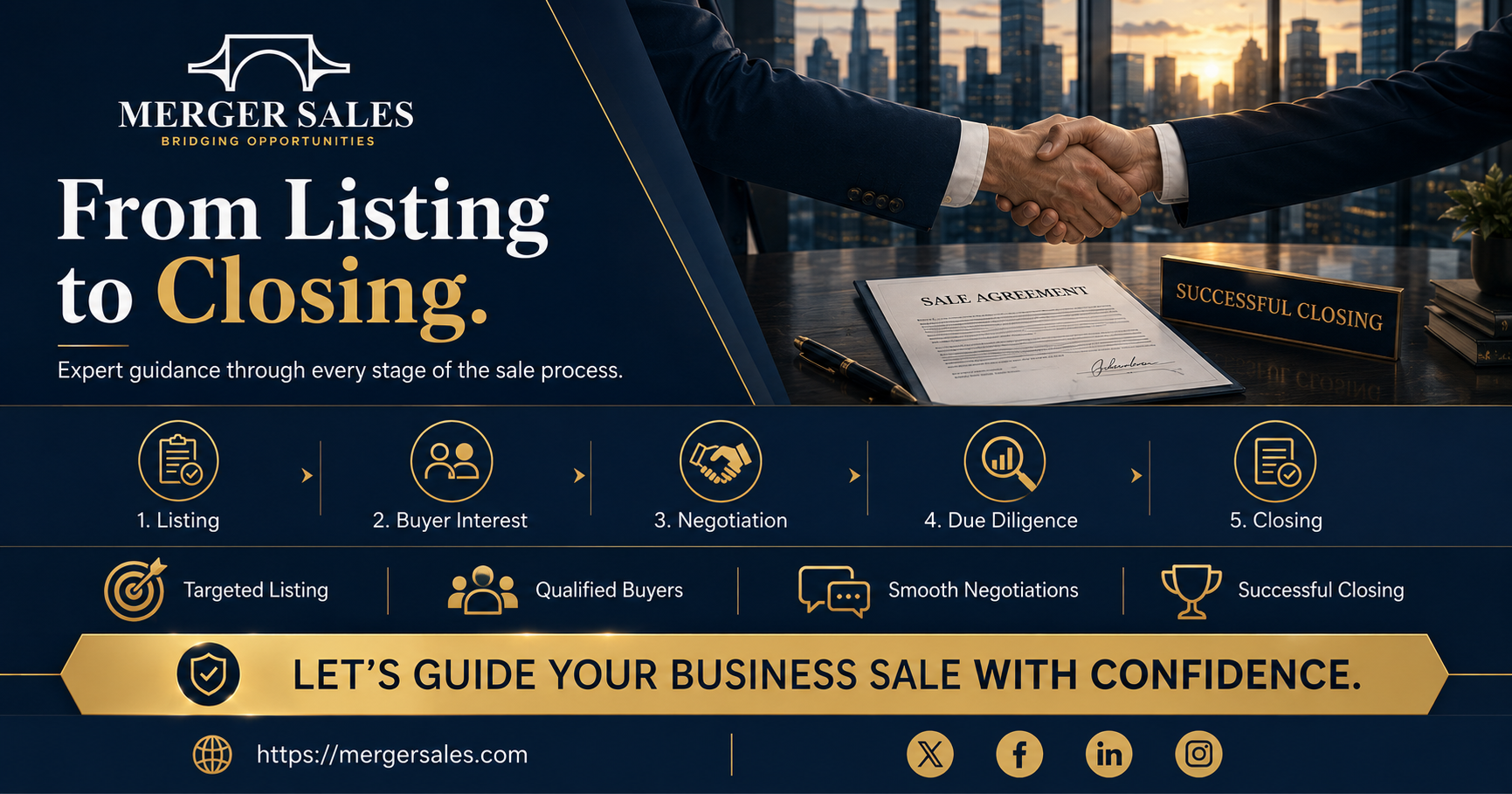
Selling a business is a major decision, and the journey does not end when the business is listed. In many ways, the real work begins after the listing goes live.
A successful business sale requires planning, buyer targeting, clear communication, strong negotiation, due diligence, and a smooth closing process. Without structure, the sale can become stressful, delayed, or less valuable than expected.
This is why the journey from listing to closing matters.
Business owners need more than exposure. They need the right buyer, the right strategy, and expert guidance through every stage of the sale process.
At Merger Sales, the focus is on helping business owners move through the sale journey with clarity, confidence, and a process designed to support better outcomes.
1. Understanding the Business Sale Journey
A business sale is not a single event. It is a structured process that moves through several important stages.
Each stage has its own purpose, challenges, and decisions. If one stage is handled poorly, it can affect the rest of the transaction.
The main stages often include:
- Listing the business
- Attracting buyer interest
- Screening qualified buyers
- Negotiating terms
- Completing due diligence
- Finalizing the sale
- Closing the deal
When these steps are managed properly, the owner can move forward with more confidence and less confusion.
2. Step One: Creating a Strong Business Listing
The first visible step in the sale process is the listing. A strong listing does more than announce that the business is available. It creates interest and helps the right buyers understand the opportunity.
A weak listing may attract the wrong audience or fail to communicate the true value of the business.
2.1 What a Strong Listing Should Include
A professional business listing should clearly explain the important details buyers need to know.
This may include:
- Business overview
- Industry and market position
- Revenue and performance highlights
- Growth opportunities
- Key strengths
- Operational structure
- Reason for sale
- Buyer opportunity
The goal is to present the business in a way that is clear, honest, and attractive to serious buyers.
2.2 Positioning Matters
Listing a business is not only about sharing information. It is about positioning the business correctly.
Good positioning answers the buyer’s main question: “Why is this business worth considering?”
A well-positioned business highlights its strengths, reduces confusion, and gives buyers a clear reason to take the next step.
3. Step Two: Attracting Serious Buyer Interest
Once the business is listed, the next goal is to attract buyer interest. However, not all interest is valuable.
Some buyers may be curious but not serious. Others may not have the financial ability or industry understanding needed to complete the deal.
That is why attracting the right buyer matters more than attracting many buyers.
3.1 What Makes a Buyer Serious?
A serious buyer usually has clear intent, financial capability, and a strong reason to acquire the business.
Signs of a qualified buyer may include:
- Clear acquisition interest
- Financial capacity
- Relevant industry knowledge
- Professional communication
- Willingness to follow a structured process
- Respect for confidentiality
Working with serious buyers helps protect time, energy, and deal quality.
3.2 Why Buyer Screening Is Important
Buyer screening helps identify who is genuinely capable of moving forward.
Without screening, business owners may waste time sharing information with people who are not ready or able to buy.
A professional screening process helps protect confidentiality and keeps the sale process focused.
4. Step Three: Managing Buyer Conversations
After serious buyers show interest, conversations begin. These conversations must be handled carefully because they shape buyer confidence.
Buyers will want to understand the business, its performance, risks, operations, and future potential.
4.1 Clear Communication Builds Trust
Clear communication helps buyers feel more confident about the opportunity.
Business owners should be prepared to explain:
- How the business operates
- What drives revenue
- Who the customers are
- How the team is structured
- Where growth opportunities exist
- What makes the business valuable
When information is presented clearly, buyers can make better decisions.
4.2 Confidentiality Must Be Protected
During the sale process, confidentiality is important. Employees, customers, suppliers, or competitors may not need to know the business is being sold at the early stage.
A professional process helps protect sensitive information while still giving qualified buyers what they need to evaluate the opportunity.
5. Step Four: Negotiation and Deal Structure
Negotiation is one of the most important stages in the business sale process. It is where both sides work toward agreement on price, terms, structure, and expectations.
Strong negotiation is not only about pushing for the highest number. It is about creating terms that support a successful and realistic transaction.
5.1 Key Areas of Negotiation
Business sale negotiations may include:
- Purchase price
- Payment structure
- Seller involvement after closing
- Transition period
- Asset or share sale structure
- Working capital expectations
- Timelines
- Conditions before closing
Each of these areas can affect the final outcome of the deal.
5.2 Confidence During Negotiation
Sellers negotiate with more confidence when they understand the value of the business and have strong supporting information.
This includes financial records, performance history, customer data, operational details, and growth potential.
The more prepared the seller is, the stronger the negotiation position can become.
6. Step Five: Due Diligence
Due diligence is the detailed review stage. It allows the buyer to verify information before completing the purchase.
This stage is important because it can either strengthen buyer confidence or reveal concerns that affect the deal.
6.1 What Buyers Review During Due Diligence
Buyers may review many areas of the business, including:
- Financial statements
- Tax records
- Customer contracts
- Supplier agreements
- Employee details
- Business assets
- Legal documents
- Operational processes
- Technology systems
- Liabilities or risks
Being prepared for due diligence helps keep the process smoother and more professional.
6.2 Preparation Reduces Delays
If documents are missing or unclear, due diligence can become slow and stressful.
Business owners should organize key information before the process begins. This helps avoid delays and supports buyer trust.
7. Step Six: Closing the Deal
Closing is the final stage of the sale process. This is where agreements are finalized, documents are signed, and ownership transitions.
A successful closing depends on everything that came before it. If the listing, buyer screening, negotiation, and due diligence were handled properly, closing becomes much smoother.
7.1 What Happens at Closing?
The closing stage may include:
- Final agreement review
- Legal document signing
- Payment completion
- Transfer of assets or shares
- Handover of key business information
- Transition planning
- Communication with relevant stakeholders
This stage should be handled carefully to avoid confusion and protect both sides of the transaction.
7.2 A Smooth Closing Requires Clear Coordination
Closing involves multiple people and details. Sellers, buyers, advisors, legal teams, and financial professionals may all be involved.
Clear coordination helps make sure every requirement is completed properly and on time.
8. Common Mistakes Business Owners Should Avoid
Many business owners make mistakes during the sale process that can reduce value or create delays.
8.1 Listing Without Preparation
A business should not be listed before key information is ready. Poor preparation can weaken buyer confidence.
8.2 Accepting Unqualified Buyer Interest
Not every interested buyer is serious. Owners should avoid wasting time with buyers who cannot complete the transaction.
8.3 Overvaluing Without Evidence
Every owner wants a strong price, but buyers need proof. Valuation should be supported by financial performance and business quality.
8.4 Poor Communication During Negotiation
Unclear communication can create misunderstandings and slow down the deal.
8.5 Entering Due Diligence Unprepared
Missing documents or unclear records can create buyer concern and delay closing.
9. How Merger Sales Supports the Process From Listing to Closing
Merger Sales helps business owners move through the sale process with structure, clarity, and confidence.
The goal is to support owners from the first listing stage to the final closing stage, while helping them protect value and manage the process professionally.
9.1 Targeted Listing
A targeted listing helps position the business in front of the right audience instead of simply chasing attention.
9.2 Qualified Buyers
Merger Sales focuses on attracting and identifying serious buyers who are more likely to understand the value of the business.
9.3 Smooth Negotiations
Negotiation support helps owners approach deal discussions with preparation and confidence.
9.4 Due Diligence Guidance
Being ready for buyer review can reduce delays and build stronger trust throughout the process.
9.5 Successful Closing
A structured process helps guide the sale toward a smoother and more confident closing.
10. Why the Right Process Creates Better Outcomes
A business sale can feel overwhelming when there is no clear process. But when each stage is managed carefully, the experience becomes more organized and less stressful.
The right process helps owners:
- Present the business professionally
- Attract better buyers
- Protect confidentiality
- Negotiate with confidence
- Prepare for due diligence
- Move toward closing with clarity
From listing to closing, every step matters.
Conclusion: Move From Listing to Closing With Confidence
Selling a business is a journey that requires more than simply finding a buyer. It requires preparation, strategy, communication, negotiation, and careful execution.
The message is simple: from listing to closing, the right guidance can make the process clearer and more confident.
At Merger Sales, the goal is to help business owners move through each stage of the sale process with structure and support.
Whether you are preparing to list your business, reviewing buyer interest, entering negotiation, or moving toward closing, a clear process can help protect value and create a smoother transition.
With the right approach, your business sale can move forward with confidence from start to finish.
Leave a Reply