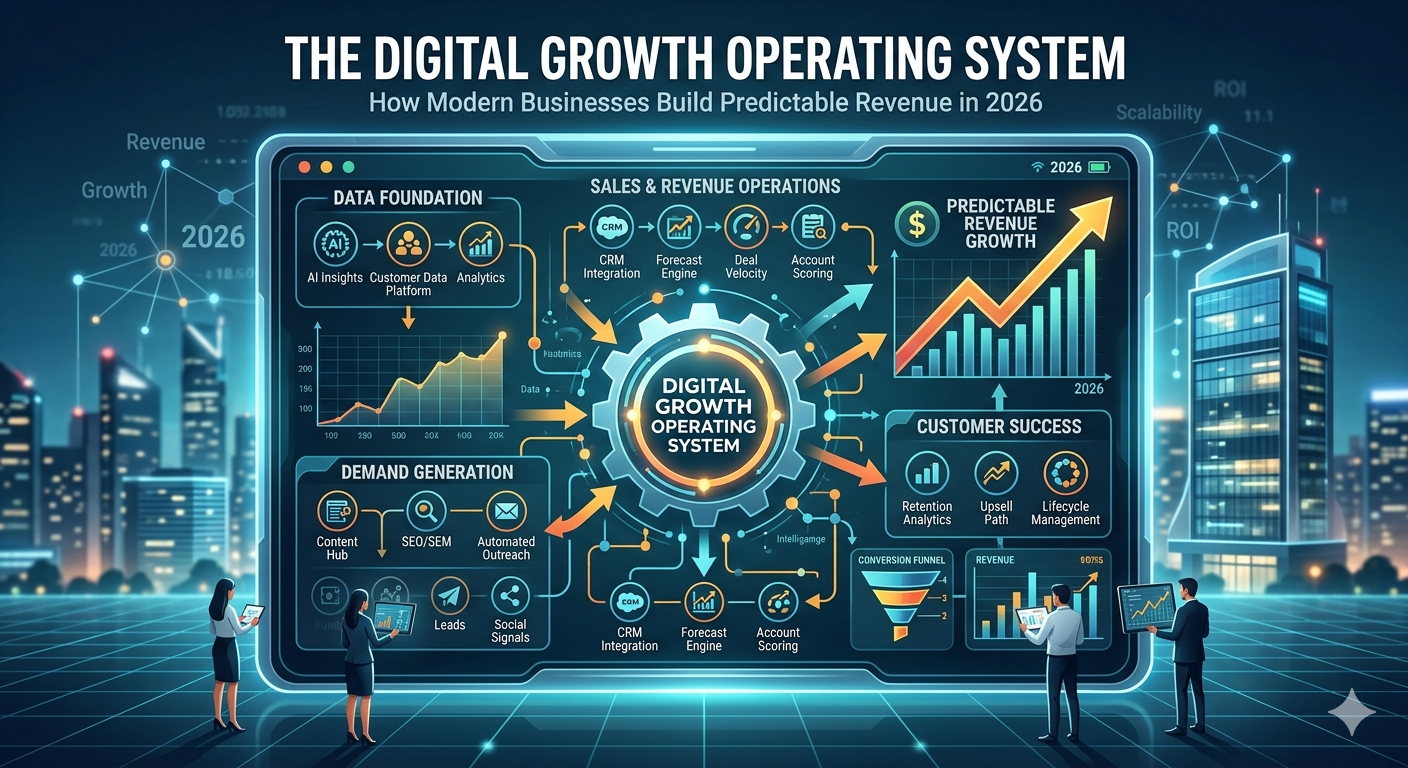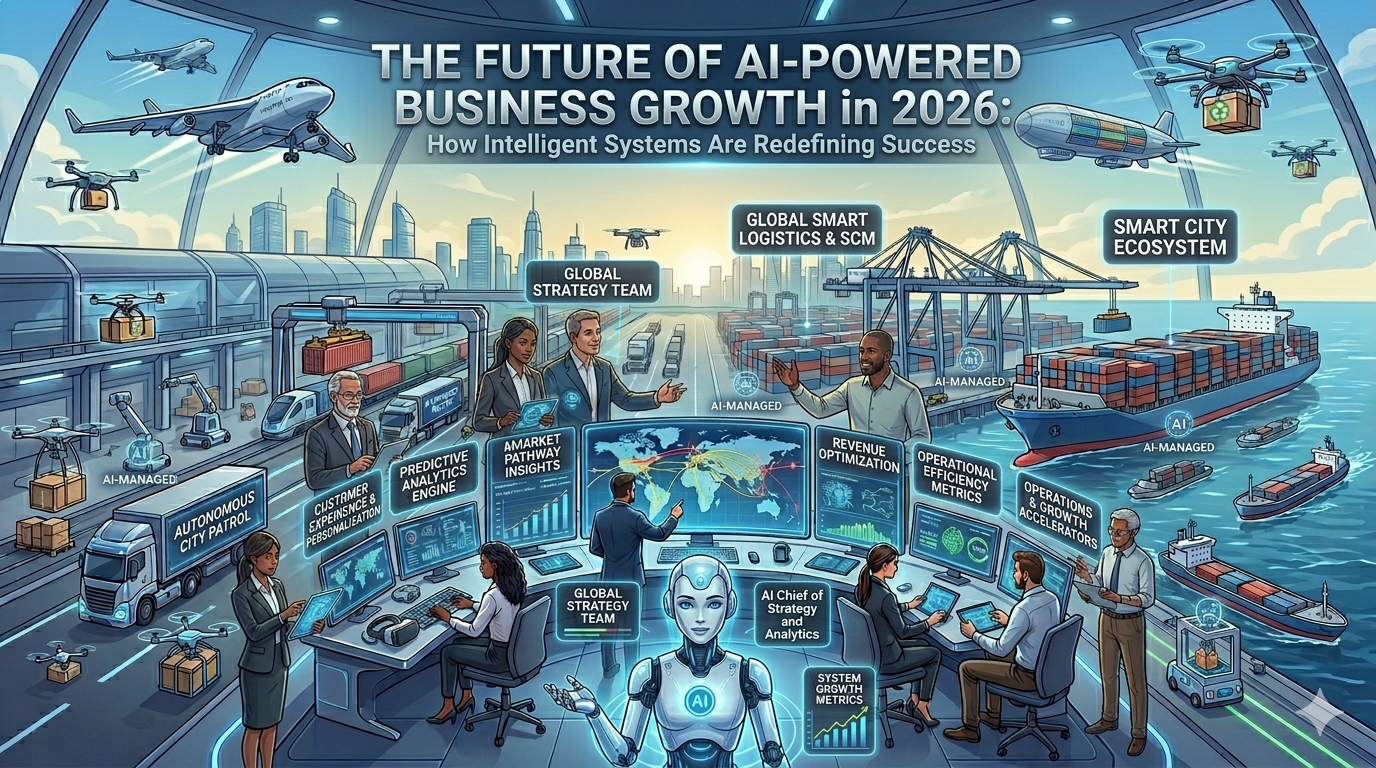
Introduction: A New Business Era Has Already Begun
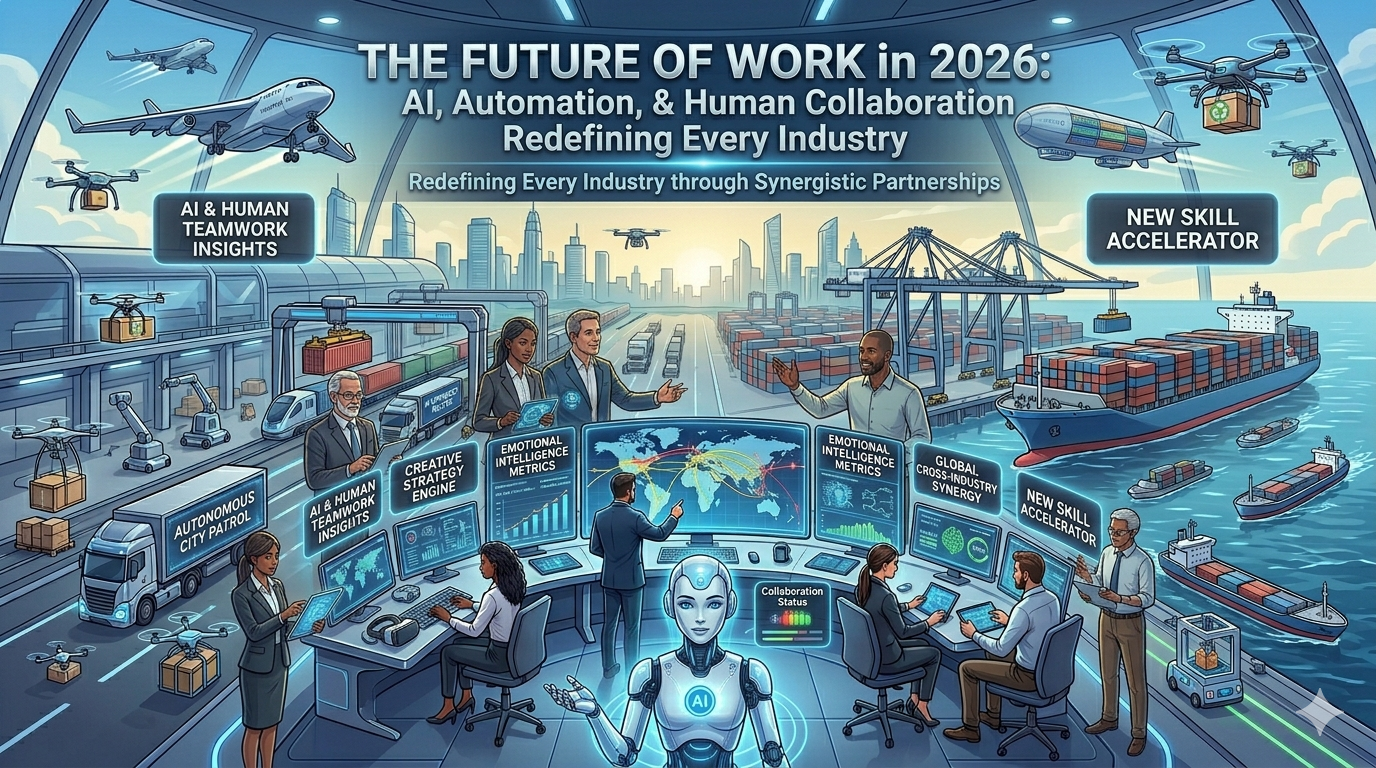
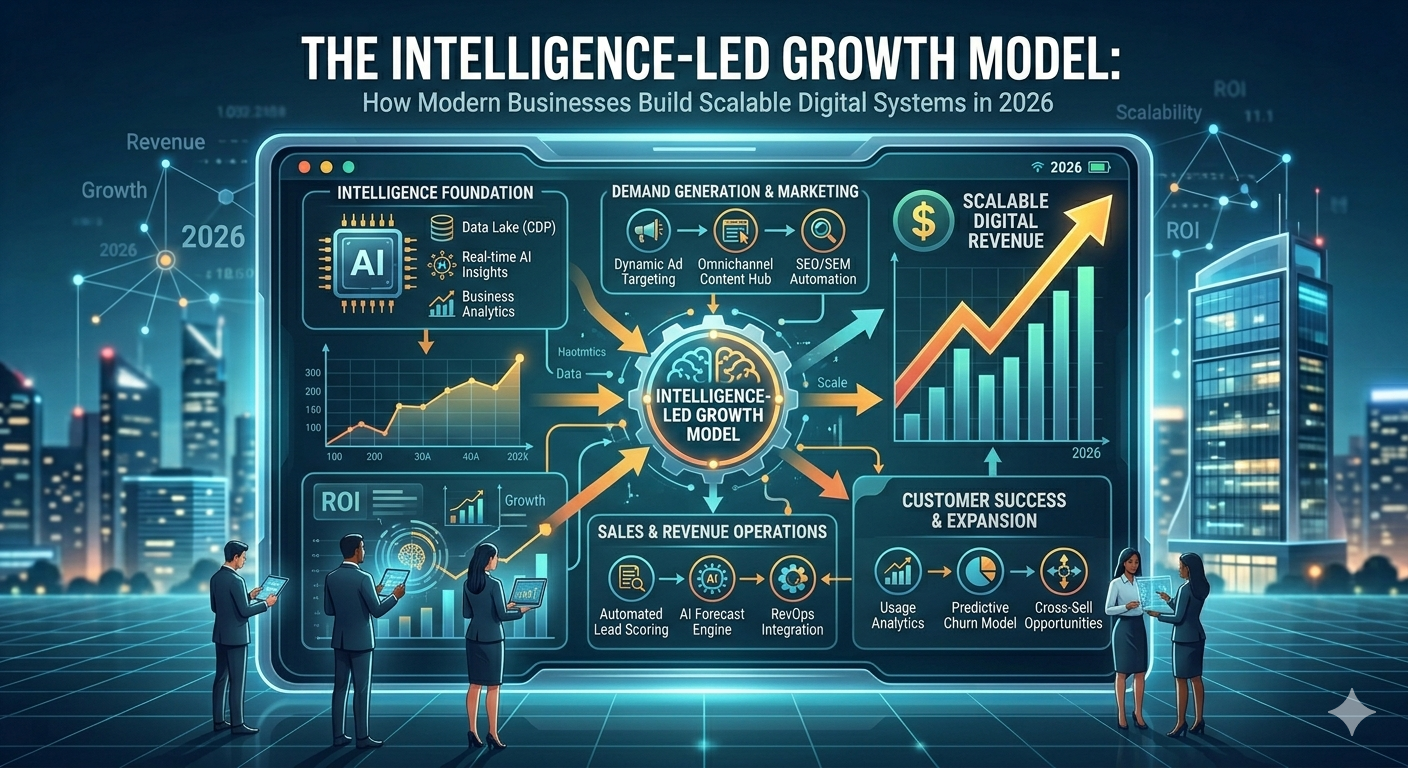
We are no longer in the early stages of digital transformation. By 2026, artificial intelligence is not just a supporting tool—it has become the core engine behind how modern businesses operate, scale, and compete.
From small startups to global enterprises, organizations are shifting toward AI-powered ecosystems that automate decision-making, predict customer behavior, optimize operations, and accelerate growth at unprecedented speed.
What used to take teams of analysts, marketers, and strategists can now be done in seconds by intelligent systems capable of learning, adapting, and improving continuously.
This shift is not optional. It is structural.
Businesses that fail to integrate AI deeply into their operations are already falling behind.
1. The Rise of Intelligent Business Systems
Traditional business models were built on manual decision-making and reactive strategies. Companies would analyze past data, make predictions, and then implement changes after delays.
AI has completely disrupted this cycle.
Today’s intelligent systems:
- Process real-time data continuously
- Detect patterns humans cannot easily see
- Predict outcomes before they happen
- Recommend optimized actions automatically
This evolution has given rise to what experts now call self-optimizing businesses—organizations that improve themselves without constant human intervention.
In practical terms, this means:
- Marketing campaigns adjust automatically based on user behavior
- Supply chains optimize themselves based on demand signals
- Customer service systems resolve issues before complaints occur
- Financial systems detect risks in real time
The business is no longer static. It is alive, adaptive, and learning.
2. AI in Decision-Making: From Human Guesswork to Predictive Precision
One of the most significant transformations in modern business is the shift from intuition-based decisions to data-driven intelligence.
AI systems now support decision-making in areas such as:
- Market expansion strategies
- Product development cycles
- Pricing optimization
- Customer segmentation
- Risk assessment
Instead of relying on historical reports, companies now use predictive models that simulate future scenarios.
For example, AI can determine:
- Which product will perform best in a specific region
- When customer demand will spike or decline
- What pricing strategy maximizes profit without losing customers
- Which marketing channels deliver the highest ROI
This eliminates guesswork and replaces it with measurable certainty.
3. Automation Beyond Tasks: The Era of Cognitive Automation
Automation is no longer limited to repetitive tasks like data entry or email responses.
We are now in the era of cognitive automation, where AI systems handle complex intellectual processes.
These systems can:
- Write marketing content
- Design ad creatives
- Analyze legal documents
- Conduct financial forecasting
- Generate business insights
Unlike traditional automation, cognitive systems can understand context, intent, and nuance.
This is especially powerful in industries like:
- E-commerce
- Logistics
- Healthcare
- Finance
- Digital marketing
The result is a massive increase in productivity while reducing operational costs.
4. AI and Customer Experience Transformation
Customer experience has become the most critical competitive advantage in 2026.
AI plays a central role in shaping how businesses interact with customers through:
Hyper-Personalization
Every customer receives a unique experience based on:
- Past behavior
- Preferences
- Purchase history
- Real-time interactions
No two users see the same journey.
Predictive Support
AI systems now solve problems before customers even report them.
For example:
- Detecting failed transactions instantly
- Offering refunds proactively
- Suggesting solutions before complaints escalate
Conversational AI
Advanced AI chat systems now operate like human experts, providing:
- Instant support
- Sales guidance
- Technical troubleshooting
- Product recommendations
This reduces dependency on large support teams while improving satisfaction.
5. Data as the New Business Fuel
In modern business ecosystems, data is more valuable than capital.
However, raw data alone is not useful. The real value comes from AI interpretation systems that transform data into actionable intelligence.
Companies now invest heavily in:
- Data infrastructure
- Real-time analytics engines
- Machine learning pipelines
- Behavioral tracking systems
The goal is simple: convert every interaction into insight.
Businesses that effectively leverage data can:
- Identify emerging trends early
- Predict customer churn
- Optimize pricing strategies
- Improve product-market fit
In 2026, companies without strong data intelligence frameworks are essentially operating blind.
6. AI in Marketing: The End of Traditional Campaigns
Marketing has undergone one of the most radical transformations due to AI.
Traditional campaigns relied on fixed strategies and scheduled adjustments. AI-driven marketing, however, is:
- Continuous
- Adaptive
- Self-optimizing
Key changes include:
1. Real-Time Campaign Optimization
Ads adjust automatically based on performance metrics.
2. AI Content Generation
Blogs, ads, emails, and social media posts are generated dynamically.
3. Audience Prediction Models
AI predicts which users are most likely to convert before targeting them.
4. Creative Testing at Scale
Hundreds of ad variations are tested simultaneously.
The result is higher ROI, lower cost, and faster scaling.
7. The Impact on Jobs and Human Roles
A major concern surrounding AI adoption is its impact on employment.
The reality is not simple replacement, but transformation.
AI is eliminating repetitive roles while increasing demand for:
- AI strategists
- Data scientists
- Automation engineers
- Prompt engineers
- Digital transformation consultants
Human roles are shifting toward:
- Strategy
- Creativity
- Oversight
- Ethical decision-making
The workforce is not disappearing—it is evolving.
8. Challenges of AI-Driven Business Ecosystems
Despite its advantages, AI integration comes with challenges:
1. Data Privacy Risks
Large-scale data usage increases exposure to privacy concerns.
2. Algorithmic Bias
AI systems can inherit biases from training data.
3. Over-Automation Risks
Excessive reliance on AI may reduce human oversight.
4. Implementation Costs
Advanced systems require significant initial investment.
Businesses must balance innovation with responsibility.
9. The Competitive Advantage of Early AI Adoption
Companies that adopt AI early gain structural advantages:
- Faster decision-making cycles
- Lower operational costs
- Better customer retention
- Higher scalability
- Improved forecasting accuracy
These advantages compound over time, making early adoption a long-term strategic win.
In contrast, late adopters face increasing difficulty catching up.
10. The Future Outlook: Fully Autonomous Enterprises
The next stage of evolution is already emerging: fully autonomous enterprises.
These are organizations where:
- AI handles operations
- Systems self-optimize
- Humans provide oversight only
- Decision-making is largely automated
This does not eliminate human involvement but redefines it.
Humans become system designers, strategists, and ethical controllers rather than operational workers.
Conclusion: Adaptation Is No Longer Optional
AI is not a future concept—it is the present reality of business transformation.
Organizations that embrace AI will:
- Scale faster
- Operate more efficiently
- Deliver superior customer experiences
- Dominate competitive markets
Those that resist will struggle to survive in increasingly automated ecosystems.
The question is no longer whether AI will change business.
It already has.
The real question is: how fast can you adapt?